
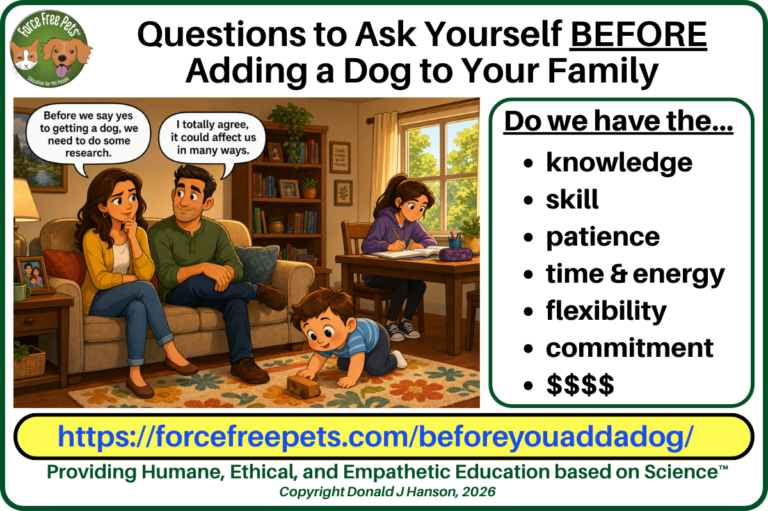
Questions to Ask Yourself BEFORE Adding a Dog to Your Family
By Don Hanson, PCBC-A, BFRAP
< A version of this article was published in the June 2026 issue of Downeast Dog News>
< A version of this article was published on the Green Acres Kennel Shop blog >
< Updated 2026-06-07 >
< The link to this page – https://www.forcefreepets.com/beforeyouaddadog/ >
Adding a puppy or dog to a family is no small matter. The decision to do so will affect all family members, and the new dog will be affected by everyone else in the home, humans and non-humans alike. Dogs have their own unique needs and behaviors, some of which conflict with human norms and desires. Therefore, to be fair to the dog and all other family members, everyone in the home needs to consider the following:
Are you ready to live with a companion that will be emotionally and cognitively equivalent to a human toddler its entire life?
If you have any experience with human toddlers, you know that their innocence and curiosity can be charming and 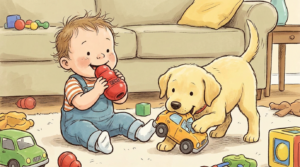 usually outweigh any mischievous or undesirable behavior. However, while most adult toddlers mature into responsible adult humans, a puppy, or even an adult dog, does not. As your dog’s parent, you will be responsible for your dog’s happiness, good health, comfort, and safety for their entire life. If you have human children or other non-human family members, you also need to consider how a dog will affect their lives. For example:
- Do you have the time, energy, and knowledge to manage human and non-human toddlers in your home?
- If you are living with elderly family members or family members with health issues, will a puppy or dog be a benefit or a nuisance?
- Is it fair to an existing dog or cat, especially those that are seniors, to bring a new dog into the home?
Do you accept that dogs have very specific behaviors they need to express, even if we don’t like them?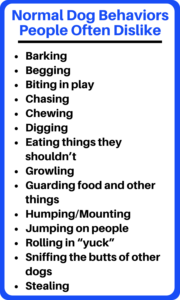
Any animal denied the opportunity to express normal behavior will not be living its best life and may act out.
These are normal behaviors for a dog: Barking, Begging, Biting in play, Chasing, Chewing, Digging, Eating things they shouldn’t, Growling, Guarding food and other things, Humping/Mounting, Jumping on people, Rolling in “yuck”, Sniffing the butts of other dogs, Stealing, and more.
Dogs are individuals, and the number and intensity of the undesirable behaviors I have listed will vary, but they are all normal. While you can use positive-reinforcement training and management of your dog and its environment to moderate many of these undesirable behaviors, you must understand and accept that some of them are at the core of the nature of a dog. You cannot train a dog to stop being a dog and expect them to have a life worth living.
 Are you willing to change your behavior if it negatively affects your dog?
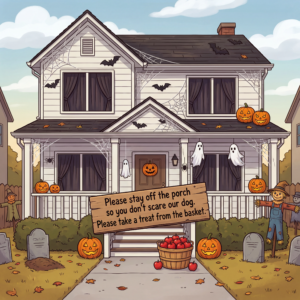
Just like us, a dog’s temperament and behavior can change at any time. A negative or frightening experience, no matter what it was, can have lifelong consequences. For example, let’s say someone visiting your home frightens your dog so badly that it becomes reactive toward everyone except family members. Are you prepared to stop having guests over, or, when you do, to set up your dog in a private room where they are comfortable while you visit with friends? Are you willing to postpone an evening out to stay home and comfort your dog during a thunderstorm? If your dog gets ill and requires hospice-level care for the last several months of its life, will you be able to provide that care? Dogs, like children and elderly parents, may require you to go above and beyond to care for them; are you ready to commit to do so?
Do you have the time to care for a dog?
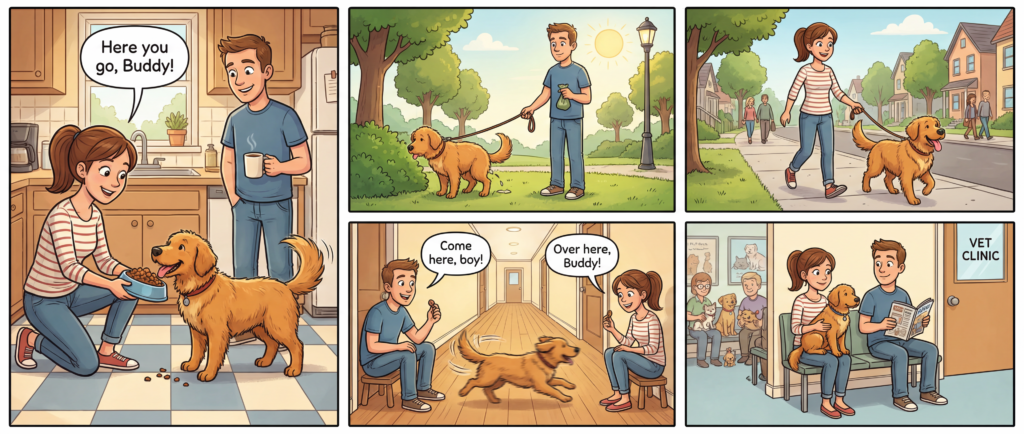
Most of us get a dog for companionship, but that means taking the time to do things with your dog that you both enjoy regularly. This includes all the regular tasks associated with having a dog that take time: feeding them, taking them out to go to the bathroom, taking them to the vet, and playing with them. While a human toddler has similar needs, they outgrow them; your dog will not.
Do you have the physical, mental, and emotional ability to care for a dog?
As we grow older, our physical, mental, and emotional abilities can change; therefore, it is essential to consider where you are now versus where you will be in 10 to 15 years.
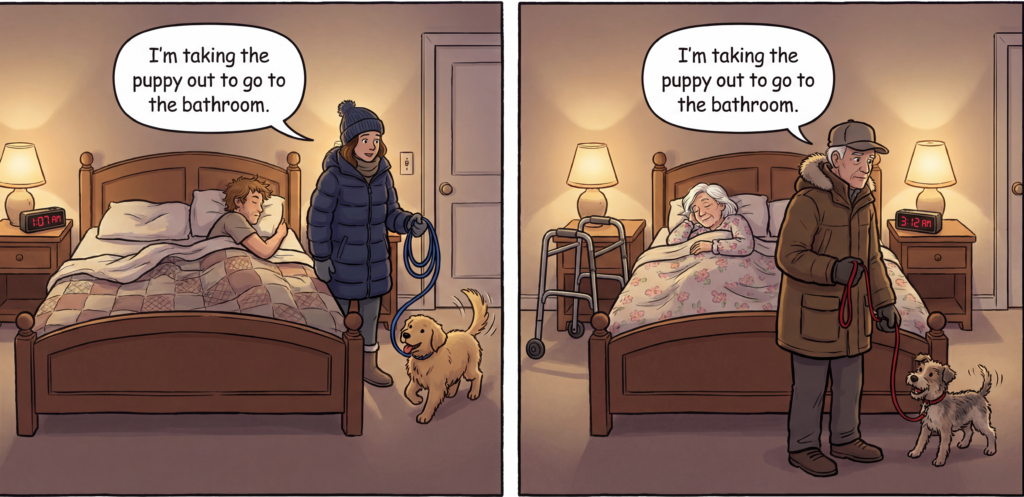
Can you pick up your dog, carry them up and down the stairs, put them in the car, and get them out of the car? Can you comfortably play with your dog and take them on adventures? Dogs are very good at reading our emotional state, and if we’re depressed, they may become depressed too. Can you maintain a cheery outlook for your dog’s benefit?
I have never housetrained a puppy in the winter by choice. However, in Muppy’s last year of life, due to her bladder cancer, I was taking her out to urinate two to four times every night December through March, just like one might need to do with a puppy. I’m not complaining; I did everything I could to keep Muppy comfortable. However, if we were to get another dog and, in 10 years, I had to take them out several times per night in midwinter, I am wise enough to know there is a very good chance it would be physically difficult for me.
Do you have the financial ability to care for a dog now and in the future?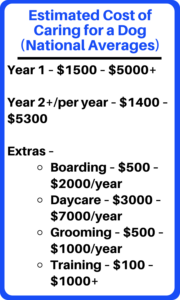
Caring for a dog is not inexpensive. Every dog needs veterinary care and a quality diet to minimize the need for veterinary care. Beyond basic veterinary care are surgery, emergency care, and possibly chemotherapy, all of which can be quite expensive. Then there are pet-sitting, daycare, boarding, training, and grooming costs. It is better to have one dog who gets the best care available than have multiple dogs that you struggle to care for financially.
While costs vary with a dog’s size, breed, and overall health, studies indicate that the lifetime cost of veterinary care alone ranges from $22,000 to over $50,000 per dog. If you use professional caregivers to assist you with your dog’s care (daycare, boarding, pet sitting, dog walking, grooming), the lifetime cost can easily be over $100,000. Data suggests that the cost of caring for a pet has increased dramatically in the past 5 years (2020 to 2025).
Have you made plans for who will care for your dog if you can no longer do so, and have you ensured 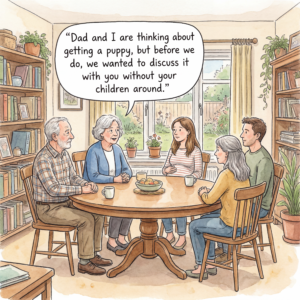 they have answered all of the above questions to your satisfaction?
As many of you know, my dog Muppy recently passed. I’m 68 and hope to be around for many more years but also recognize that fate can end a life at any time. Personally, I would not be comfortable leaving a pet behind unless I knew they would be loved and cared for as I had loved and cared for them. The time to have this discussion with those you are depending on to care for your dog is before you ever get the dog.
