
Cooperative Care for Cats–How to Get Your Cat to LOVE Their Carrier
By Don Hanson, PCBC-A, BFRAP
< A version of this article was published on the Green Acres Kennel Shop blog >
< Updated 2026-10-22 >
< The link to this page – https://www.forcefreepets.com/Cat-Carrier-Safe/>
Cats often choose to enter confined spaces as shown by the photos on the right. So why do they often refuse to get into their carrier and run and hide somewhere even more confining the moment you bring it out? The answer is simple. The choice to enter the carrier is not theirs! Additionally,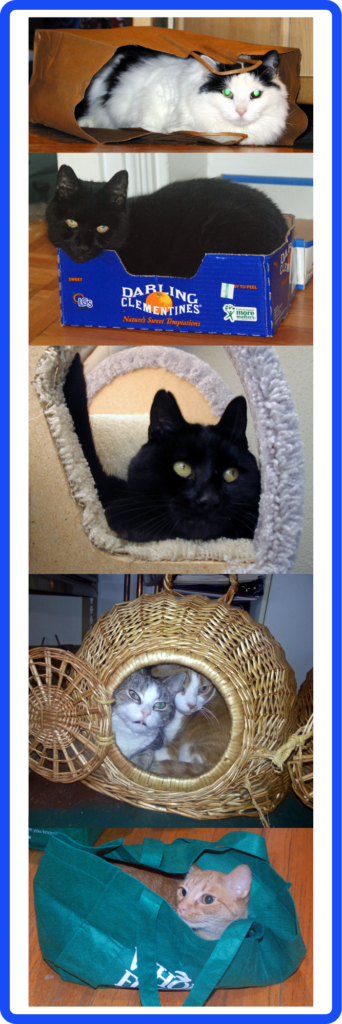 the carrier has been associated with a struggle with you and possibly a destination they want to avoid.
Unfortunately, most cats only see their carrier moments before you force them into it for a car ride, usually to the veterinarian, groomer, or boarding kennel. Wouldn’t your cat be happier, and your life significantly easier, if they enjoyed their carrier and maybe even walked right in? Getting there is not as complicated as you might think.
Using a carrier is the safest way to transport an animal from your home to another location. I would strongly discourage anyone from transporting a cat without a carrier. No matter how well-behaved and tolerant your cat is, if you are in an accident, your cat will be terrified and will do everything they can to get away.
So how do you get your cat to like their carrier?
- Make sure you have a carrier that is safe – If you do not already have a carrier, an airline-style carrier is the preferred choice. They are usually made of plastic and have a wire door at the front and sometimes a second wire door on the top. Don’t simply buy the cheapest carrier you can find. You want a carrier with doors that can be secured and stay secured. Cardboard boxes labeled as cat carriers can work, but they are not nearly as safe, and we have known many cats to escape from these. Soft-sided carriers are easier to store and are lighter, but in the case of an accident, they offer your cat little to no protection.
- Make sure that your cat finds the carrier to be comfortable – By itself, a plastic carrier is not going to be the most comfortable place; however, you can make it quite posh by inserting a blanket or a pillow that your cat already enjoys.
- Leave the carrier out so that your cat can explore it – If your cat is like most cats, they love boxes, bags, and other things that they can explore and hide in. Remove the door from your carrier and place it in an area your cat frequents. Don’t try to coax your cat into the carrier; let them explore it when they are ready. To make the carrier even more rewarding, put a small dish with a tablespoon of your cat’s favorite canned food or a few favorite treats at the back. Now getting in the crate will be very rewarding. If your cat has favorite toys that they will chase and catch, toss a toy in the carrier and let them go get it and play with it. If your cat is hesitant about the carrier, talk to your veterinarian or favorite pet care provider about Feliway®, a feline pheromone that can have a calming effect on cats.
- Keep the carrier out and keep rewarding your cat for using it – Leave the carrier out as an alternative resting place for your cat and continue to reward them for its use by occasionally feeding them in the carrier, tossing treats in the carrier, and tossing toys in the carrier.
- Put the door back on the carrier and practice carrying your cat – Put the door back on the carrier and continue to reward your cat for going in and exploring. Once they are used to the door being back on, toss a treat into the carrier and, after the cat goes in, gently and quietly close the door; wait a few seconds, then open it and wait for your cat to come out. Repeat this a couple of times per day until your cat is used to hopping in and out of the carrier. Once this becomes routine, close the door, pick up the carrier, hold it briefly, and set it back down. Practice this for several days and then start carrying the cat around in the carrier. Eventually, you can get the cat in the carrier, carry them to the car, and then immediately bring them back inside and let them out.
- Use the carrier to transport your cat to the vet or kennel – Many cats do not travel well and may get car sick. Make sure your cat’s favorite blanket or towels are in the carrier, and if you have Feliway, spray it on the blanket about 30 minutes before putting the cat in the carrier. Secure the carrier in your car so it won’t get thrown if you need to stop quickly, and cover it with another blanket to limit visual stimulation. When you bring your cat home, leave the carrier out and keep rewarding them for using it, for the rest of their life.
With a little extra time and attention, your cat can soon be an expert traveler. The time you invest in helping your feline friend feel safe in their carrier will pay off later, when you need to get your cat where it needs to go.
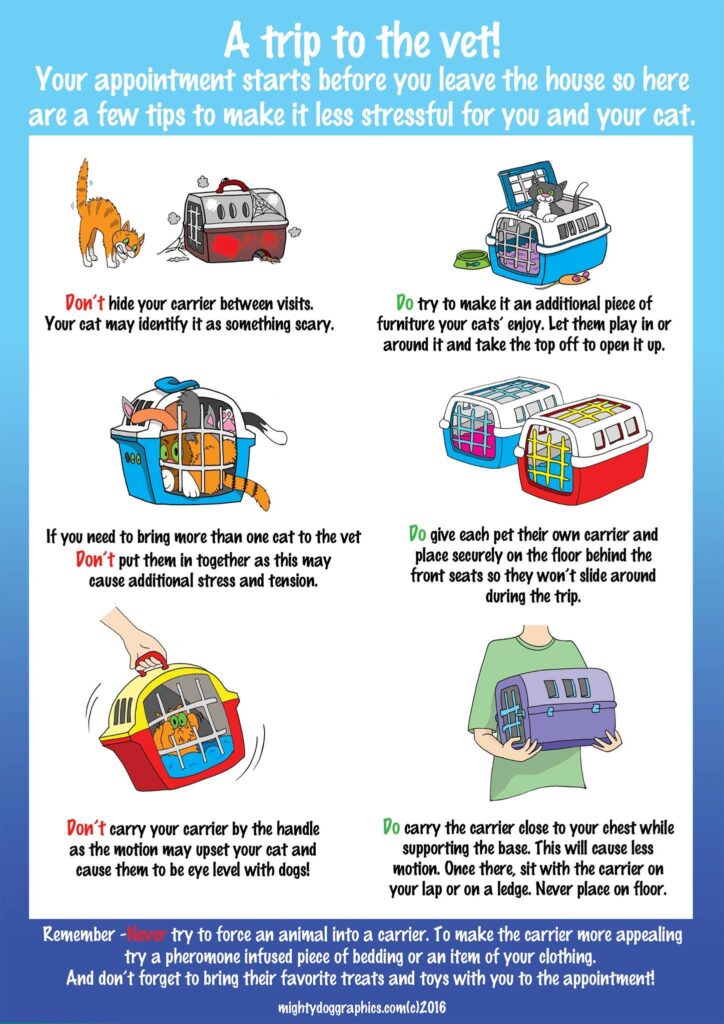
This infographic from our friends at MightyDogGraphics can remind you how to prepare your cat for travel. You can download the graphic by clicking on it.