
Shared Blog Post-Dr Lisa Radosta on Facebook – 2026-06-28
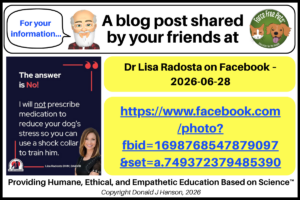
Don shares a Facebook post from Veterinary Behaviorist Dr. Lisa Radosta stating that it is inappropriate to give dogs medications to help them better tolerate shock collars.

Don shares a Facebook post from Veterinary Behaviorist Dr. Lisa Radosta stating that it is inappropriate to give dogs medications to help them better tolerate shock collars.

An audio excerpt from Star 977 discussing the Woof Meow Tip for July 6 2026, where Don discusses the importance of being patient and letting your dog set the pace when training, and to always put a nurturing relationship between you and your dog first.

An audio excerpt from Star 977 discussing the Woof Meow Tip for May 18, 2026, where Don discusses the importance of making the training process fun for both you and your dog and the benefit of the entire family being involved.

An audio excerpt from Star 977 discussing the Woof Meow Tip for May 4, 2026, where Don discusses the importance of creating optimal conditions for your dog to learn, as described in the book Beyond Belly Rubs. He stresses the importance of you, your dog,

Don discusses the many uses for treats: as training rewards, to supplement nutrition from real food, to enrich our dogs’ lives while keeping them busy, to help keep their teeth clean, and to show affection or “just because.” He emphasizes the importance of being aware

This video from All Dog, Are Shock Collars Hurting Your Dog? should be required viewing for everyone who cares about dogs, including every pet care professional. I will warn you that it does contain graphic videos of dogs being shocked and photos of dogs that

This is the first in a series of articles in which Don reflects on how the pet care industry has changed for the better over the past 30 years. He discusses how canine behavior experts have universally condemned the use of dominance and aversive methods,

Don discusses the importance of accepting our dogs for who they are and the importance of always being patient and kind. He shares a story of how he let his ego become so wrapped up in making his dog Gus “perfect: that it damaged their

Don discusses when and why a dog might run off and offers management and training tips you can implement to decrease the probability of it happening.

Don discusses the many roles typical of a professional dog trainer as they work with a family and their dog, all while being knowledgeable, skilled, ethical, kind, compassionate, and patient.